5 Common Mistakes in System Design Interviews and How to Avoid Them
System design interviews are notoriously difficult. Unlike coding interviews, there’s no single right answer. The open-ended nature can lead even seasoned engineers into traps. Whether you’re preparing for FAANG or a startup, avoiding these five common mistakes will dramatically improve your performance. Let’s get into them.
1. Jumping Straight into a Solution Without Clarifying Requirements
The biggest mistake candidates make is diving into architecture before fully understanding the problem. You might think you know what the interviewer wants, but assumptions are dangerous. For example, if asked to design a URL shortener, do you need analytics? Is the scale global or regional? What about expiration policies?
Instead, spend the first 5-10 minutes clarifying functional and non-functional requirements. Ask targeted questions: “How many users?” “What is the read-to-write ratio?” “Are we optimizing for latency or throughput?” This shows you can handle ambiguity, a key skill for senior engineers. It also sets a clear scope so you don’t design an overly complex system for a simple problem.
Many engineers fear that asking questions will waste time. In reality, it saves time and demonstrates thoughtfulness. The interviewer is evaluating your process, not just the final diagram. So take a breath and ask before you draw.
2. Ignoring Trade-offs and Bottlenecks
Every system design involves trade-offs. A common mistake is presenting a solution as if it has no drawbacks. For example, you might confidently suggest using a NoSQL database for all data without acknowledging that joins or complex transactions become difficult. Or you might propose a microservices architecture without considering operational overhead. If you’re unsure about when to use a monolith, check out our guide on Microservices vs Monolith: How to Choose Your Architecture for clarity.
Interviewers want to see that you understand the weaknesses of your choices. Explicitly discuss trade-offs. For instance: “I’m choosing Cassandra here for write scalability, but remember it’s eventually consistent, which might be a problem for real-time payments. We could add a cache layer to mitigate that.” This shows depth and realistic thinking.
Also, identify potential bottlenecks. A classic example is a database becoming a single point of failure. Mention replication, sharding, or read replicas as solutions. Don’t wait for the interviewer to point them out – beat them to it. This turns a weakness into a strength.
3. Over-Engineering the Solution
In an effort to impress, many candidates over-engineer. They throw in load balancers, microservices, Kubernetes, data lakes, and event streaming for a simple chat application that could be built with a few servers. This ignores the principle of YAGNI (You Aren’t Gonna Need It).
Start simple. Present a baseline solution that works for the given scale, then iterate. For example, for a news feed system, begin with a single server, a relational database, and a simple cache. Then, as the interviewer asks about scaling to millions of users, discuss adding a CDN, sharding, or a message queue. This demonstrates that you can build incrementally and only add complexity when justified.
Over-engineering also wastes precious interview time. You might spend 20 minutes on a message queue design when the interviewer wanted to focus on data storage. Keep the architecture as simple as possible for the requirements given. Complexity is not a signal of intelligence; clarity is.
4. Designing in a Vacuum Without Considering Real-world Constraints
A design is only good if it can be built and operated. Many candidates propose elegant architectures that ignore cost, latency, regional restrictions, or team size. For instance, using a multi-region, multi-AZ setup for a hobby project that handles 100 requests per day is absurd.
Discuss realistic constraints: “We have a small team, so we should use managed services to reduce ops burden.” Or “Since our users are mostly in Europe, let’s avoid US-East-only services.” Also consider availability vs. cost trade-offs. A startup might prefer a lower-cost solution with eventual consistency, while a bank needs strong consistency and higher costs.
Another real-world aspect is monitoring and operations. How will you detect failures? What happens when a server crashes? Mentioning logs, metrics, and alerts shows you think beyond the initial deployment. This maturity is often what lands senior roles.
5. Poor Communication and Lack of Structure
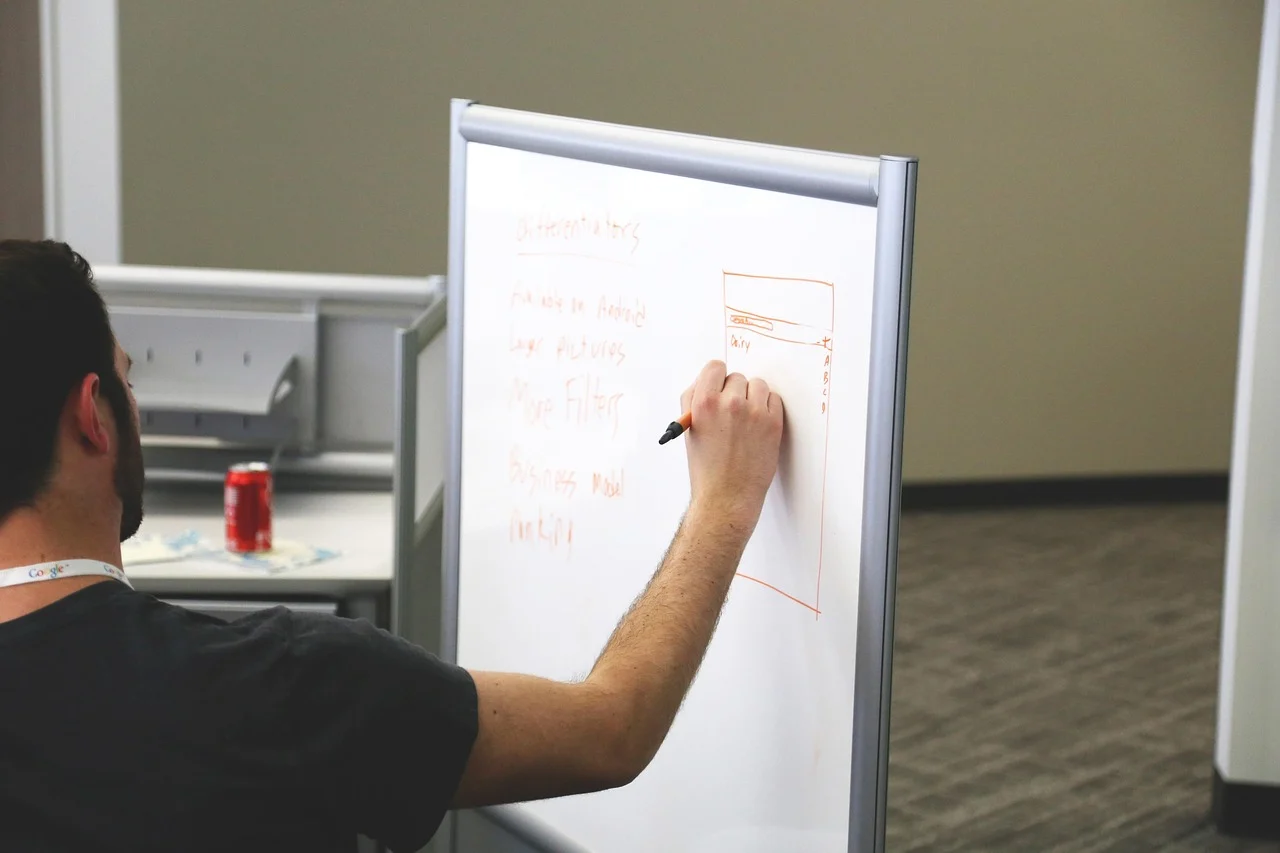
System design is a collaborative exercise. Some candidates talk at the whiteboard for 40 minutes without pausing for questions. Others stay silent while drawing. Good communication is as important as technical correctness. You need to articulate your thought process clearly and invite feedback.
Structure your answer. A common framework is: 1) Requirements, 2) High-level design, 3) Deep dive into components, 4) Bottlenecks and trade-offs. Use headings to guide the interviewer. For example: “Now let’s talk about the database. I propose using PostgreSQL because we need ACID compliance for the transaction history.” This makes your design easy to follow.
Also, pay attention to the interviewer’s hints. They might say, “What about latency?” — that’s a cue to discuss caching or CDN. Or they might say, “We have many more writes than reads” — adjust your design accordingly. Showing you can listen and adapt is a mark of a great collaborator.

Comparison Table: Mistakes and Fixes
| Common Mistake | Why It Hurts | How to Avoid It |
|---|---|---|
| Jumping to solution | Leads to irrelevant design | Spend 5-10 min clarifying requirements |
| Ignoring trade-offs | Looks naive, misses depth | Explicitly discuss pros/cons of each choice |
| Over-engineering | Wastes time, adds complexity | Start simple, iterate based on scale |
| Ignoring constraints | Unrealistic or unbuildable | Mention cost, latency, ops, team size |
| Poor communication | Confuses interviewer | Structured approach, talk aloud, listen |
How to Practice Effectively for System Design Interviews
Knowing the mistakes is not enough. You need deliberate practice. Start by picking a common problem like “design a URL shortener” or “design a chat system.” Set a timer for 45 minutes and simulate the interview. Follow a structured approach: clarify requirements, propose a high-level design, deep-dive into a few components, and discuss trade-offs. Record yourself or practice with a friend. Getting feedback on your communication and depth is invaluable.
Another effective technique is to study existing systems. Read engineering blogs from companies like Stripe, Uber, or Netflix. But don’t just skim—ask yourself why they made certain choices. For example, why did Twitter move from a relational database to a distributed cache? Understanding the reasoning behind real-world decisions helps you internalize trade-offs. When you encounter a similar problem in an interview, you can draw on that insight.
Also, build a mental library of design patterns. Learn when to use a consistent hash ring, a two-phase commit, or a saga pattern. These are the building blocks of system design. Knowing them allows you to quickly assemble a solution without reinventing the wheel. But always explain why you chose that pattern given the specific requirements. Pattern recognition without context is just trivia.
What Interviewers Really Look For
Beyond technical correctness, interviewers evaluate your seniority through your thought process. They want to see how you handle ambiguity, how you prioritize, and how you balance competing concerns. A junior engineer might give a technically correct but impractical design. A senior engineer will consider operational complexity, cost, and team capability. They’ll also know when to push back on unrealistic requirements. For example, if the interviewer insists on very high uptime for a prototype, you might suggest a more pragmatic SLA that allows for some downtime during early development.
Another key trait is adaptability. If the interviewer changes the requirements mid-way, do you get flustered or do you calmly adjust your design? Flexibility is a sign of experience. Practice re-designing your solution when you learn a new constraint. For instance, if the scale goes from 1 million users to 1 billion, how does your architecture change? Being able to pivot smoothly is highly valued.
Finally, demonstrate a growth mindset. If you don’t know a technology, say so and explain how you would learn it. For example: “I haven’t used Kafka in production, but I understand the concepts of message brokers. I would read the documentation and run a small proof of concept to validate my assumptions.” Honesty combined with a plan to fill the gap is far better than bluffing.
Frequently asked questions
What is the biggest mistake in system design interviews?
The biggest mistake is jumping into a solution without fully understanding the problem. Candidates often assume requirements and design a system that doesn't fit the actual use case. Always start by clarifying functional and non-functional requirements with the interviewer.
How can I avoid over-engineering in a system design interview?
Start with a simple baseline solution that works for the given scale. Then, as the interview progresses, add complexity only when justified by the requirements. This shows you can build incrementally and avoid unnecessary complexity.
Should I discuss trade-offs in my system design?
Yes. Discussing trade-offs demonstrates depth. For each decision, explain why you chose one technology over another and mention potential drawbacks. For example, choosing NoSQL for scalability may sacrifice consistency. Interviewers value this honesty.
How do I structure my answer in a system design interview?
Use a clear framework: start with requirements, then high-level design, then deep dive into key components, and finally discuss bottlenecks and trade-offs. Talk through your reasoning and invite questions. This structure makes your thought process easy to follow.
How important is communication in system design interviews?
Extremely important. System design is collaborative. Communicate your ideas clearly, pause for questions, and listen to hints from the interviewer. Good communication can make up for modest technical knowledge, while poor communication can sink a strong design.
You may also like



Leave a Reply